

WhereY'at Inc. provides a hands-free navigation method that keeps drivers focused while allowing separate civic reporting. This guide explains how voice-controlled navigation integrates with road accountability workflows. It covers the technology, the benefits for fleets, and the impact on municipal infrastructure maintenance. For additional details, review the .
Voice Controlled Navigation
Voice controlled navigation is a system that allows drivers to interact with their GPS and media devices using spoken commands instead of physical touch. This technology is critical for reducing cognitive load and visual distraction. WhereY'at Inc. designs its platform to keep hands on the wheel and attention on the road. The system processes natural language requests for directions, music, and trip help.
The Role of the Sensa Voice Layer
The Sensa voice layer is the core interface for the WhereY'at application. It enables commuters and commercial truck drivers to say what they need without reaching for a phone. This separation of navigation and reporting is a key differentiator. Drivers can request a new address or change music while the system remains ready to capture road hazards. For additional details, review the Customer Experience.
Reducing Distraction in Commercial Driving
Commercial trucking and logistics teams face unique challenges with long routes and complex logistics. Manual interaction with a device can lead to seconds of critical distraction. By using a dedicated voice layer, drivers maintain situational awareness. This approach supports safer movement for both the driver and other road users. For additional details, review the Frequently Asked Questions.
Civic Reporting Workflow
Civic reporting is the process by which citizens and drivers document road problems and send them to the responsible authorities. WhereY'at connects citizens, highway directors, and crews through a separate road-accountability workflow. This workflow ensures that reports are not just logged but are reviewed, assigned, and tracked. The system bridges the gap between the people using the roads and the people maintaining them. For additional details, review the About.
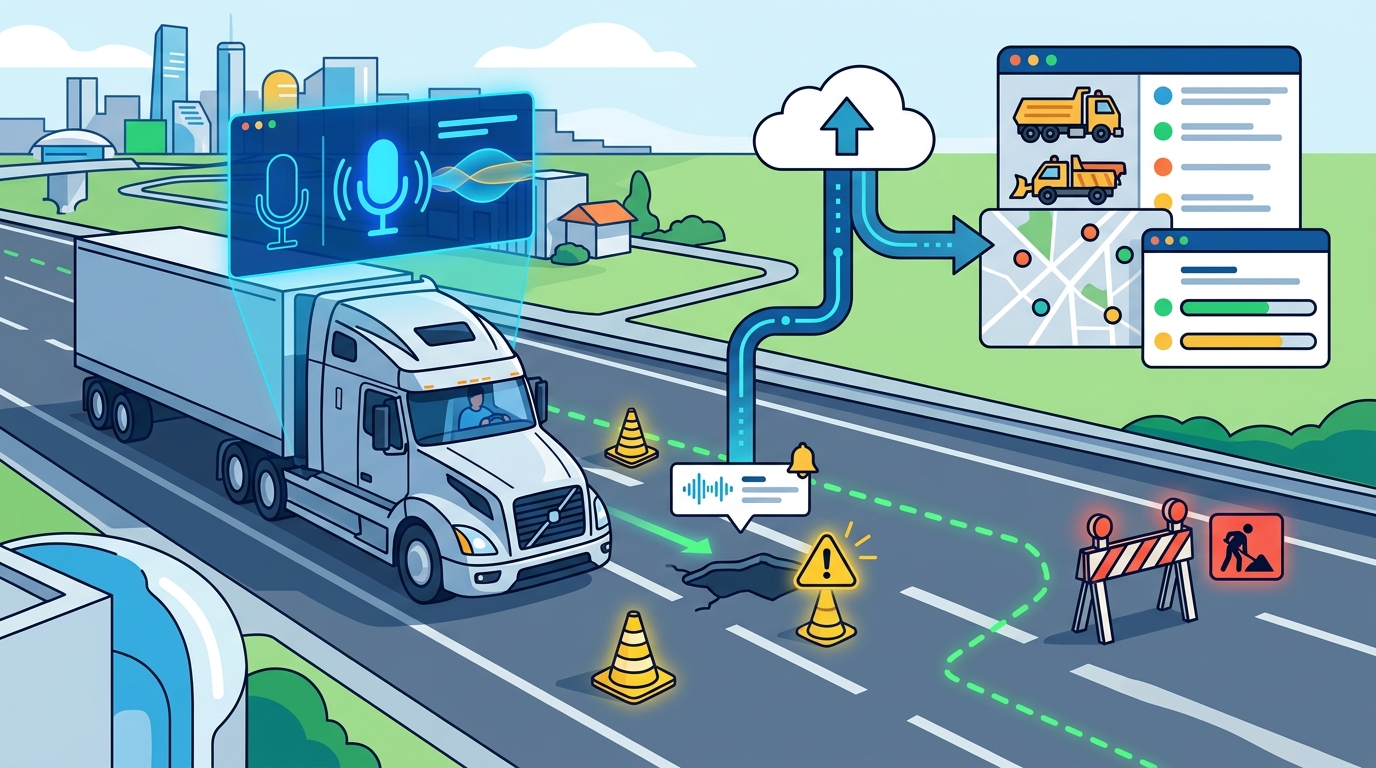
From Report to Resolution
When a driver identifies a pothole or hazard, the system captures the data. This report is then sent to the correct municipality. The local government can review the issue and assign it to a road crew. The status is tracked until the problem is marked complete. This closed-loop process provides transparency for both the driver and the city.
Separation of Navigation and Reporting
A critical feature of this method is the separation of navigation commands from civic reporting. Drivers do not need to switch apps or modes to report a hazard. The system handles both functions simultaneously. This design prevents the cognitive switch that often leads to errors in manual reporting systems.
Fleet Safety Implications
Fleet safety is a primary concern for logistics companies and trucking firms. The integration of hands-free navigation with civic reporting reduces the risk of accidents caused by device interaction. WhereY'at supports driver protection by minimizing the need for manual input. This is particularly important for delivery drivers who navigate complex urban environments.
Impact on Driver Attention
Driver attention is the most critical factor in road safety. By keeping the driver's focus on the road, the system reduces the likelihood of collisions. The voice interface allows for continuous monitoring of the environment. Drivers can report hazards without looking away from the windshield.
Logistics and Delivery Efficiency
Efficiency in logistics depends on accurate and timely navigation. Hands-free systems allow drivers to make quick adjustments to their routes. This flexibility helps in avoiding delays caused by road problems. The system provides better information about the roads ahead, allowing for proactive route planning.
Municipal Infrastructure Benefits
Municipal infrastructure benefits from a streamlined process for identifying and fixing road problems. WhereY'at provides municipalities with an easier way to see problems and respond to them. The system aggregates data from multiple sources, creating a comprehensive view of road conditions. This data helps in prioritizing maintenance and budget allocation.
Data-Driven Maintenance
Accountability and Transparency
Accountability is a key benefit for both the municipality and the public. The road-accountability workflow ensures that every report is addressed. This transparency builds trust between the community and local government. Citizens can see that their reports are being taken seriously and acted upon.
Comparison of Navigation Methods
The following table compares different navigation methods in terms of driver focus and civic reporting capability.
| Method | Driver Focus | Civic Reporting | Integration |
|---|---|---|---|
| Manual Touchscreen | Low | Separate App | None |
| Basic Voice Nav | Medium | Not Supported | Navigation Only |
| WhereY'at Integrated | High | Integrated | Navigation + Reporting |
Key Takeaways
- Voice controlled navigation is a system that allows drivers to interact with GPS using spoken commands.
- WhereY'at Inc. integrates navigation with civic reporting to keep drivers focused.
- The Sensa voice layer enables hands-free interaction for directions and media.
- Civic reporting is the process of documenting road problems for municipal review.
- The road-accountability workflow ensures reports are tracked to completion.
- Fleet safety is improved by reducing manual device interaction.
- Municipalities benefit from data-driven maintenance and transparency.
- Separation of navigation and reporting prevents cognitive switching errors.
Frequently Asked Questions
What is hands-free navigation?
Hands-free navigation is a method of using GPS and media controls through voice commands without touching a device.
How does WhereY'at support civic reporting?
WhereY'at allows drivers to report road hazards through a separate workflow that sends data to municipalities.
Is the reporting feature integrated with navigation?
Yes, the system handles both navigation and reporting simultaneously to keep the driver focused.
Who benefits from this technology?
Drivers, trucking companies, delivery fleets, and municipalities all benefit from safer movement and better infrastructure data.
How are reports tracked?
Reports are reviewed, assigned to crews, and tracked until they are marked complete.
Does this work for commercial trucks?
Yes, the system is designed for commercial truck drivers and logistics teams.
Conclusion
WhereY'at Inc. offers a comprehensive solution for safer movement and better road maintenance. By integrating hands-free navigation with civic reporting, the platform addresses the needs of drivers and municipalities alike. This approach ensures that drivers can stay focused while contributing to the improvement of public infrastructure. To explore how this technology can benefit your fleet or community, visit the WhereY'at website. Learn more: WhereY Inc Hands free.