
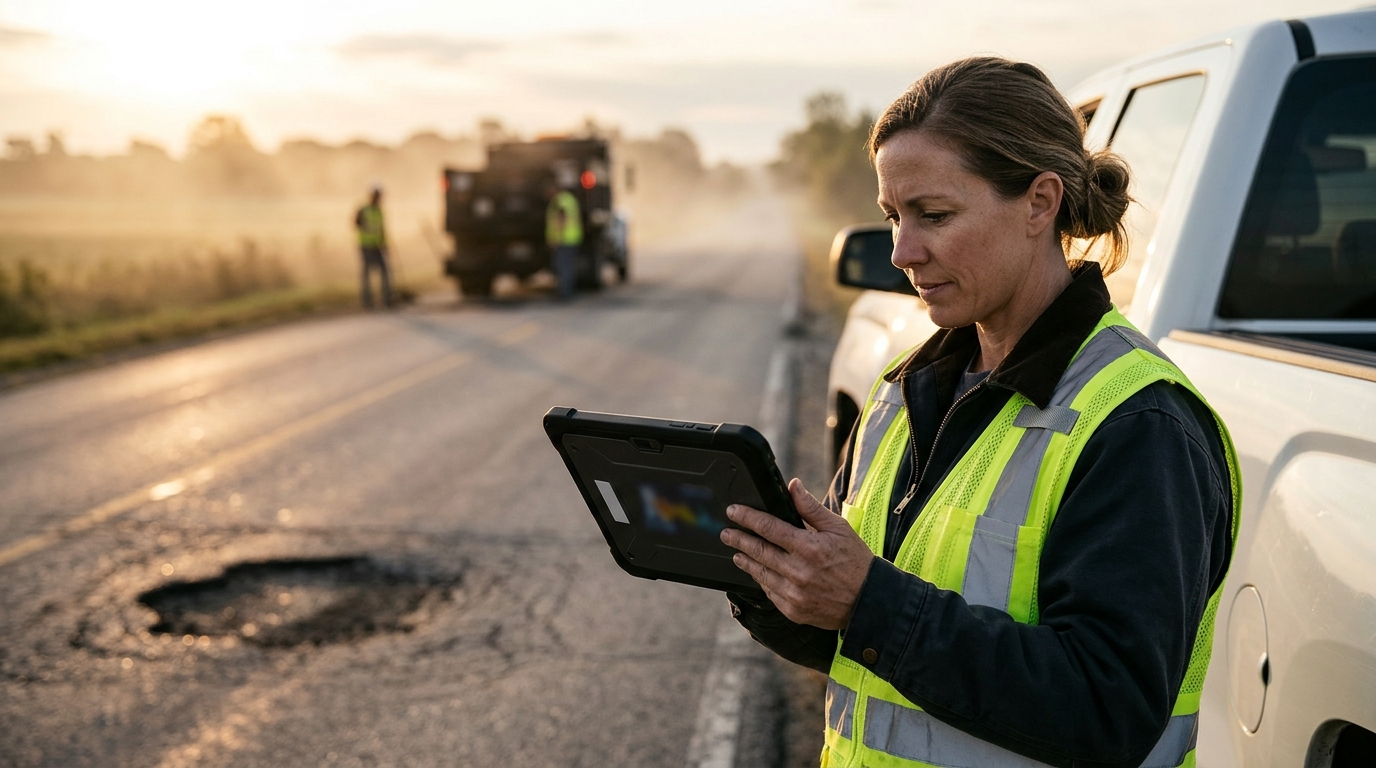
WhereY'at Inc. helps municipalities and fleets manage road hazards by validating driver-submitted reports before they reach maintenance crews. This process ensures that crews only respond to verified issues, saving time and resources. By filtering out false positives and confirming defect severity, road accountability workflows become more efficient and reliable. For additional details, review the .
1. Capture Precise Geolocation Data
Accurate GPS coordinates are the foundation of any valid road report. When a driver uses a hands-free navigation layer to flag a pothole or hazard, the system must record the exact latitude and longitude. This data allows the platform to map the issue to a specific road segment. Without precise geolocation, maintenance crews may waste time searching for a problem that is actually located a mile away.
2. Validate Vehicle and Driver Credentials
Confirming the reporter's identity prevents fraudulent or malicious submissions. The system should verify that the report comes from a registered user or a known fleet vehicle. This step is critical for commercial trucking and logistics teams where accountability is paramount. By linking the report to a verified driver profile, the municipality can trust the source of the data.
3. Cross-Reference with Existing Defect Records
Check if the reported location already has an open or closed work order. A driver might report a pothole that was fixed last week or is currently being repaired. The verification engine should query the municipal database to see if a ticket already exists for that specific coordinate. If a recent repair is on record, the new report can be flagged as a duplicate or a recurrence, rather than a new issue.
4. Analyze Sensor and Environmental Context
Use vehicle telemetry to confirm the severity of the reported hazard. Modern commercial vehicles often have sensors that detect sudden impacts or suspension stress. If a driver reports a pothole, the system can check if the vehicle's sensors recorded a corresponding impact event. This technical validation adds a layer of objective evidence to the subjective driver report, helping to prioritize severe hazards over minor ones.

5. Apply Automated Severity Scoring
Assign a priority level based on the type and location of the hazard. Not all road defects are equal. A small crack in a residential zone is less urgent than a large pothole on a highway. The verification process should apply a scoring algorithm that considers the road class, traffic volume, and the nature of the defect. This ensures that critical safety issues are routed to the top of the maintenance queue.
6. Route to the Correct Maintenance Jurisdiction
Ensure the report is sent to the responsible agency or crew. Roads are often maintained by different entities, such as city departments, state highways, or private contractors. The verification step must identify the correct jurisdiction based on the geolocation data. This prevents reports from being lost in the wrong inbox and ensures that the right team receives the alert for action.
Choosing the Right Verification Workflow
Select a verification method that balances speed with accuracy. For high-volume fleets, automated sensor cross-referencing is ideal. For smaller municipalities, manual review of geolocation and driver credentials may suffice. The goal is to reduce noise while ensuring that every valid report reaches the right crew quickly.
Frequently Asked Questions
How does WhereY'at verify driver reports?
WhereY'at uses a combination of geolocation data, driver credentials, and automated scoring to validate reports. This ensures that only verified hazards are sent to road maintenance crews.
Why is geolocation important in road reporting?
Geolocation ensures that maintenance crews know exactly where to go. Without precise coordinates, crews may waste time searching for the reported issue, reducing overall efficiency. according to eCFR 49 CFR
Can drivers report hazards while driving?
Yes, WhereY'at is designed for hands-free use. Drivers can report hazards using voice commands, keeping their hands on the wheel and eyes on the road.
How are duplicate reports handled?
The system cross-references new reports with existing records. If a similar issue was recently reported or fixed, the new report is flagged as a duplicate or recurrence.
Who receives the verified reports?
Verified reports are routed to the appropriate municipal agency or road maintenance crew based on the location of the hazard.
Does WhereY'at work for commercial fleets?
Yes, WhereY'at is designed for commercial trucking and logistics teams, providing a way to report and track road issues safely and efficiently. Learn more: WhereY Inc Hands free.