
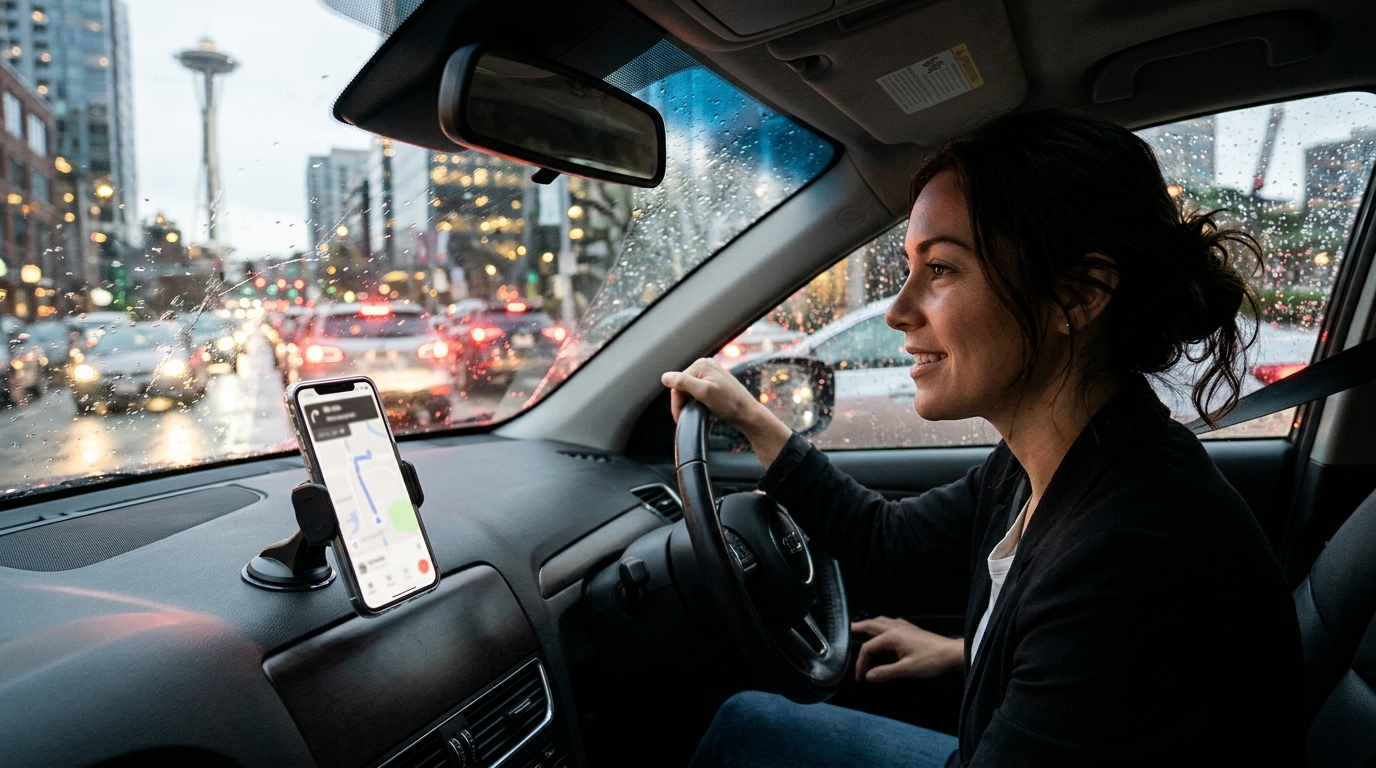
Hands-free navigation improves driver safety by keeping eyes on the road and hands on the wheel, reducing the cognitive and physical distraction of manual phone use. In Seattle, where dense traffic and complex intersections demand constant attention, this shift is critical. The National Highway Traffic Safety Administration reports that 3,208 people died in distraction-affected crashes in 2024, highlighting the severe risk of manual device interaction. By automating address entry and route adjustments through voice, drivers maintain situational awareness. WhereY'at Inc. builds technology specifically to support this safer driving model for commuters and fleets.
Reducing Cognitive Load in Dense Traffic
Hands-free navigation is a system that allows drivers to interact with routing and media devices without holding a phone. This technology reduces the physical burden of operating a device. A recent study led by researchers at the Center for Injury Research and Policy at Nationwide Children’s Hospital found that hands-free cellphone laws are associated with fewer driver deaths. The study analyzed data from 1999 through 2016 across 50 U.S. states. This correlation suggests that removing the need to hold a phone directly impacts survival rates in crashes. For additional details, review the Customer Experience.
For Seattle drivers, this means less time spent fumbling with a screen during rush hour. Instead of searching for a button, a driver can simply speak. This keeps the mind focused on the flow of traffic rather than the interface of a device. The implication is a smoother, more predictable driving environment for everyone on the road. For additional details, review the Frequently Asked Questions.
Physical Safety and Crash Risk
New research from the Virginia Tech Transportation Institute suggests that drivers who use hands-free electronic devices, as opposed to handheld ones, are less likely to get into a crash. This physical separation from the device is a key safety factor. When a phone is held, a crash can cause the device to become a projectile or cause the driver to lose grip on the steering wheel. Hands-free systems eliminate this physical hazard. For additional details, review the About.
However, safety is not just about hands. A report from AAA notes that talking, texting, and adjusting music might be even more distracting if you are not using your hands, due to cognitive load. This nuance is important. While hands-free is safer than handheld, it is not risk-free. The goal is to minimize the time the brain spends on the device. By using voice commands for simple tasks like changing a destination, the cognitive load is lower than typing. This allows the driver to keep their eyes on the road for longer periods.
WhereY'at Inc. designs its voice layer to handle these interactions efficiently. The system is built to understand natural speech, reducing the need for repeated commands. This efficiency is crucial in high-stress driving environments. It ensures that the safety benefit of hands-free technology is maximized, not just theoretically present.
Legal Compliance and State Laws
Strong and clear hands-free driving laws correlate with reduced distracted driving rates, according to a report by the Governors Highway Safety Association and Cambridge Mobile Telematics. Many states, including Washington, have specific regulations regarding phone use while driving. In South Carolina, for example, drivers may listen to navigation instructions and traffic or road condition information, as long as the mobile electronic device is not held by the driver or supported with any part of his or her body. This legal framework pushes drivers toward hands-free solutions.
Compliance with these laws is not just about avoiding tickets. It is about adopting safer habits. When drivers know that holding a phone is illegal, they are more likely to use voice commands. This behavioral shift has a measurable impact on road safety. The adoption of these laws creates a cultural norm where hands-free use is the default. This norm is particularly important in urban areas like Seattle, where the consequences of distraction are higher due to pedestrian density.
Fleet Operations and Commercial Safety
For commercial trucking and logistics teams, the stakes of distraction are even higher. Large vehicles require more time and space to stop, making any distraction potentially fatal. Hands-free navigation allows drivers to manage routes and communications without taking their eyes off the road. This is critical for long-haul drivers who spend hours on the highway. The ability to request directions or report issues via voice keeps the driver focused on the vehicle and the road ahead.
WhereY'at Inc. connects citizens, highway directors, and crews through a separate road-accountability workflow. This means that when a driver encounters a hazard, they can report it without stopping or fumbling with a phone. The report is sent to the right municipality, where it can be reviewed and assigned to a road crew. This system not only improves safety for the reporting driver but also for others who will encounter the same hazard. It creates a feedback loop that makes the road network safer over time.
The implication for fleet managers is a reduction in incident rates and improved operational efficiency. Drivers spend less time on administrative tasks and more time driving safely. This leads to better delivery times and lower insurance costs. The technology supports a culture of safety that extends beyond the individual driver to the entire organization.
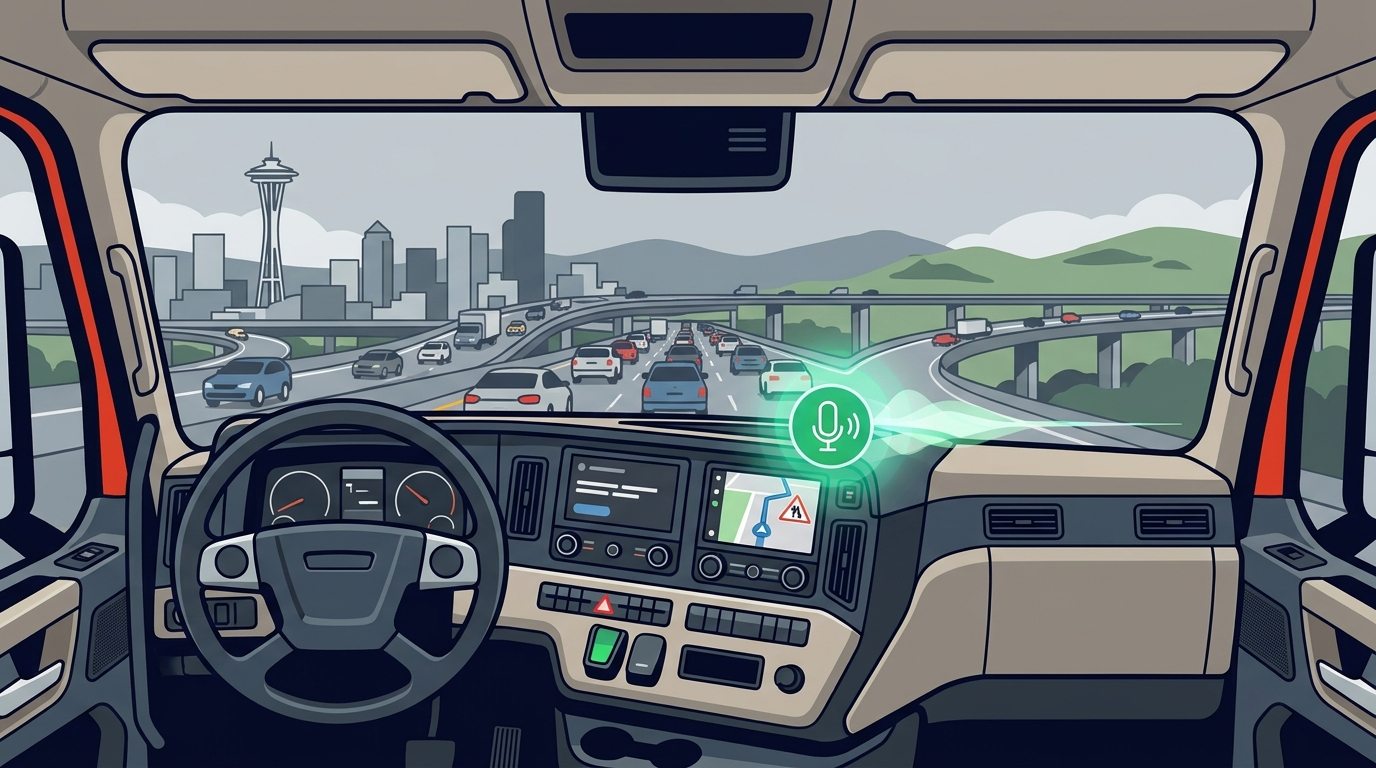
Municipal Benefits and Road Maintenance
Hands-free navigation also benefits municipalities by providing real-time data on road conditions. When drivers report potholes or other hazards via voice, the data is aggregated and sent to local authorities. This allows municipalities to prioritize repairs based on actual usage and severity. Instead of relying on periodic inspections, they can respond to issues as they arise. This proactive approach improves the overall quality of the road network.
For Seattle, this means a more responsive infrastructure. The city can allocate resources more effectively, fixing the most dangerous problems first. This not only improves safety but also reduces the cost of vehicle maintenance for drivers. A well-maintained road network is a key component of urban safety. WhereY'at Inc. plays a vital role in this ecosystem by connecting the users of the roads with the people responsible for maintaining them.
The data collected from these reports can also be used to identify patterns in road degradation. This long-term data helps municipalities plan for future infrastructure improvements. It is a powerful tool for urban planning and safety management. By leveraging the data from hands-free navigation, cities can create safer, more efficient road networks for everyone.
Key Takeaways
- Hands-free navigation reduces physical distraction by keeping hands on the wheel.
- Studies show that hands-free laws are associated with fewer driver deaths.
- Cognitive load is lower with voice commands than with manual typing.
- Compliance with state laws encourages safer driving habits.
- Fleet operations benefit from reduced incident rates and improved efficiency.
- Municipalities gain real-time data for better road maintenance.
- WhereY'at Inc. provides a seamless voice layer for safer driving.
Frequently Asked Questions
Is hands-free navigation completely safe?
Hands-free navigation is safer than handheld use, but it is not risk-free. Cognitive distraction can still occur, so drivers should use it judiciously.
Does Washington State allow hands-free navigation?
Yes, Washington State allows the use of hands-free devices for navigation and communication while driving, provided the device is not held.
How does WhereY'at Inc. improve safety for fleets?
WhereY'at Inc. allows fleet drivers to report hazards and manage routes via voice, keeping their attention on the road and reducing incident rates.
Can I report road hazards while driving?
Yes, with WhereY'at Inc., you can report potholes and other hazards using voice commands without taking your hands off the wheel.
What is the impact of hands-free laws on safety?
Research indicates that strong hands-free laws correlate with reduced distracted driving rates and fewer driver deaths. according to Why hands free
How does voice navigation reduce cognitive load?
Voice commands are generally faster and less cognitively demanding than typing, allowing drivers to keep their eyes on the road longer.
Conclusion
Hands-free navigation is a critical tool for improving driver safety on Seattle roads. By reducing physical and cognitive distraction, it helps prevent crashes and saves lives. WhereY'at Inc. is at the forefront of this technology, providing a seamless voice layer for drivers, fleets, and municipalities. To experience the safety benefits of hands-free navigation, explore WhereY'at Inc. today. Learn more: WhereY Inc Hands free.