
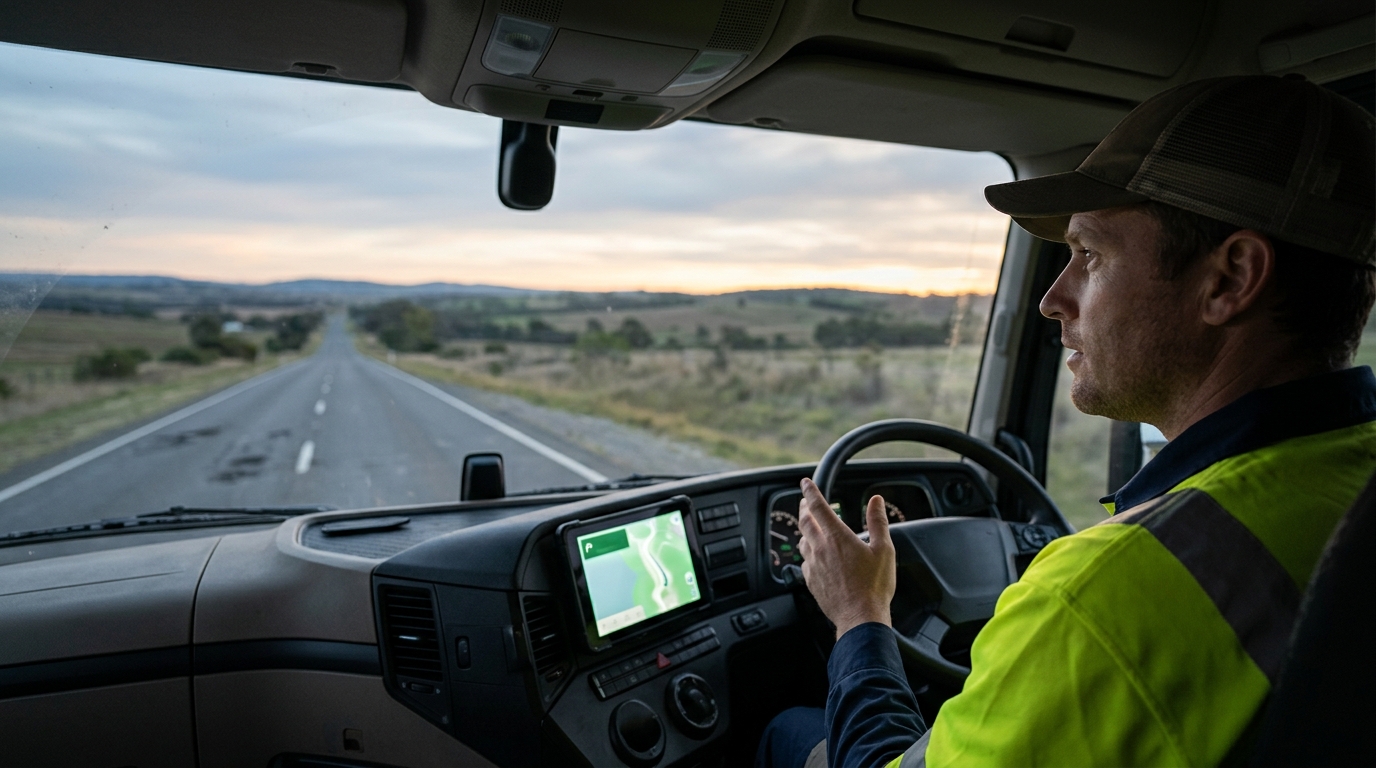
The Cognitive Load of Manual Reporting
Manual interaction with a smartphone while driving significantly increases cognitive load. When a driver attempts to type a location or describe a pothole, their attention is split between the road and the screen. This division of attention is dangerous because it reduces reaction time to sudden hazards. Research indicates that even brief visual distractions can lead to serious accidents. For example, one study found that talking on a cellular telephone more than 50 minutes per month while driving was associated with a 5.59-fold increased risk of a traffic accident, as noted in medical literature on impaired driving. Voice control eliminates the need for visual input, allowing the driver to keep their eyes on the road. For additional details, review the Frequently Asked Questions.
How Voice Interfaces Reduce Distraction
Integrating Reporting into Navigation Flows
Benefits for Municipal Infrastructure
Municipalities benefit from the high-quality data provided by voice-controlled reporting systems. Because drivers are not distracted, the location data is more accurate and reliable. This allows road crews to prioritize repairs based on real-time user reports. Road safety begins with creating awareness about rules and regulations pertaining to traffic, and this has to be executed with the help of comprehensive educational campaigns, as stated in public health research on road safety. By using technology to promote road safety, municipalities can respond to hazards more quickly. This creates a safer environment for all road users, including pedestrians and cyclists. For additional details, review the About.
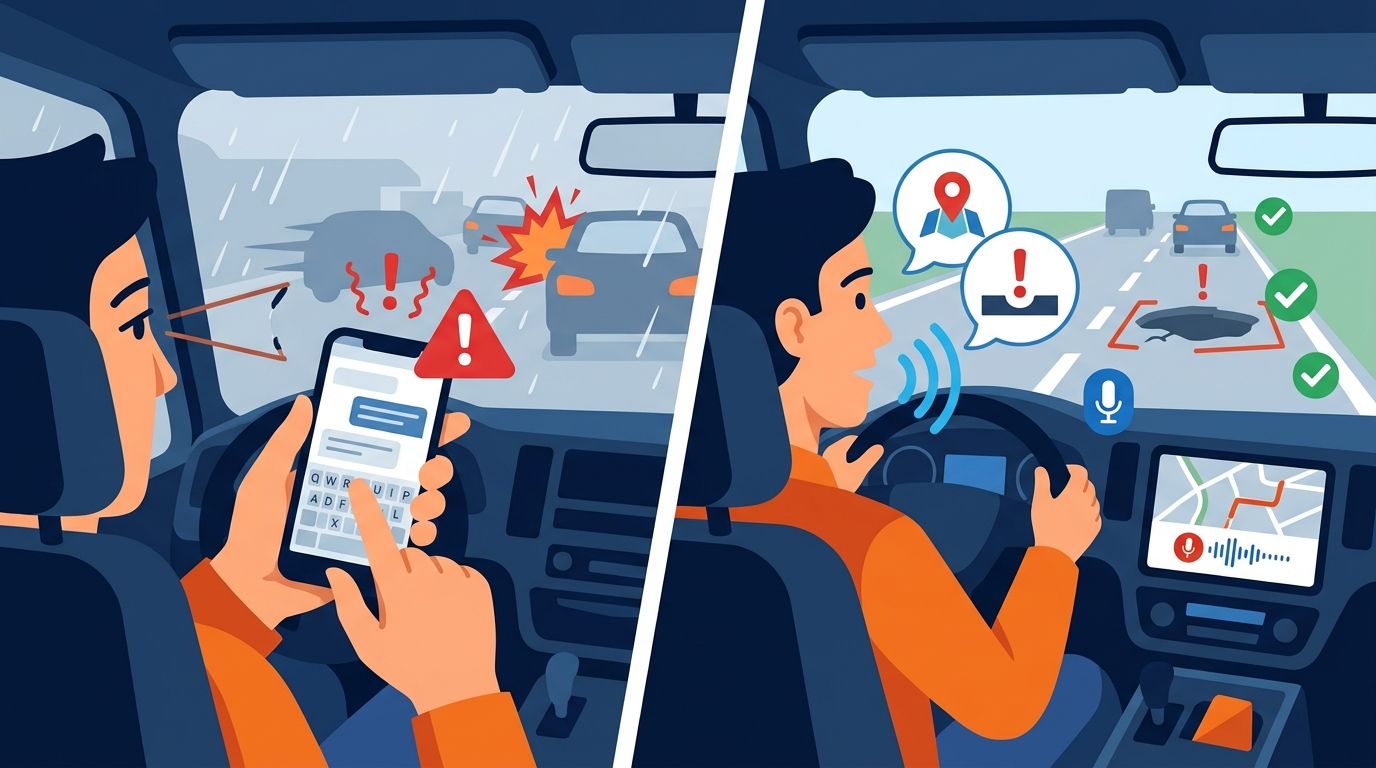
Trust and Acceptance of Driver-Assistance Systems
Driver trust in voice-controlled systems is essential for widespread adoption. If drivers do not trust the accuracy of the system, they are less likely to use it for reporting. Analysis of advanced driver-assistance systems shows that determining the level of acceptance and trust drivers have in these systems is a key area of research, according to PMC research. WhereY'at Inc. focuses on building trust by providing clear feedback and ensuring that reports are acted upon. When drivers see that their reports lead to actual road repairs, their confidence in the system increases. This positive feedback loop encourages more participation and better data collection.
Key Takeaways
- Voice-controlled navigation reduces visual and manual distraction, allowing drivers to stay focused on the road.
- Manual phone use while driving significantly increases the risk of traffic accidents.
- Modern voice interfaces use improved synthetic voices to minimize cognitive distraction.
- Municipalities benefit from accurate, real-time data provided by voice-controlled reporting systems. according to Analysis of Advanced
- Driver trust in the system is crucial for widespread adoption and effective data collection.
Frequently Asked Questions
Does voice-controlled navigation completely eliminate distraction?
No, voice-controlled navigation does not completely eliminate distraction. While it reduces visual and manual distraction, it can still cause cognitive distraction if the interaction is complex or the voice quality is poor. However, modern systems are designed to minimize this impact.
How does WhereY'at Inc. handle reported road problems?
WhereY'at Inc. sends reported road problems to the appropriate municipality for review. The reports are then assigned to a road crew, tracked, and marked complete once the issue is resolved.
Is voice-controlled navigation safe for trucking fleets?
Yes, voice-controlled navigation is safe for trucking fleets. It allows drivers to report hazards that could damage expensive vehicles without taking their attention off the road. This is particularly important for large vehicles that require more space and time to react to hazards.
What types of road problems can be reported using voice control?
Drivers can report a variety of road problems using voice control, including potholes, road hazards, and other issues. The system captures the location and context automatically, making it easy for drivers to report problems without manual input.
How does voice-controlled navigation benefit municipalities?
Voice-controlled navigation benefits municipalities by providing accurate, real-time data on road conditions. This allows road crews to prioritize repairs and respond to hazards more quickly, creating a safer environment for all road users.
Conclusion
Voice-controlled navigation is a powerful tool for keeping drivers safe while reporting road problems. By reducing visual and manual distraction, it allows drivers to maintain focus on the road. WhereY'at Inc. leverages this technology to connect drivers with municipal infrastructure teams, creating a safer and more efficient road network. To learn more about how voice-controlled navigation can benefit your fleet or municipality, visit WhereY'at Inc. according to TomTom Learn more: whereyatinc com.