
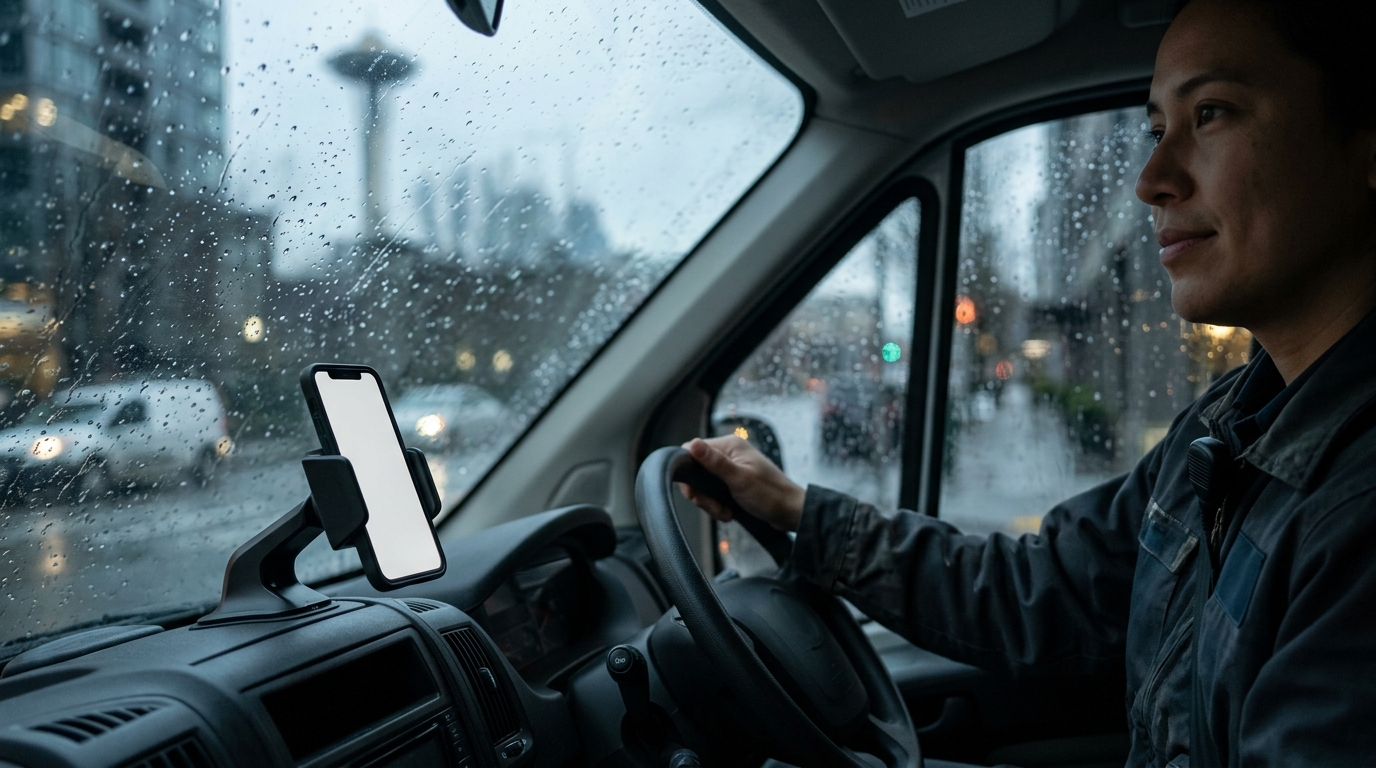
Hands-free navigation quality in Seattle is defined by the system's ability to process complex urban voice commands without requiring visual attention or physical interaction. This capability is critical in a dense, rainy, and highly regulated metropolitan area. This guide covers Washington state distracted driving laws and the specific operational mechanics of voice command layers. It explains how WhereY'at Inc. integrates these elements to support safer movement for drivers and fleets. For additional details, review the .
Distracted Driving Laws in Washington State
Washington State enforces strict regulations regarding driver attention. Understanding these laws is the first step in evaluating any navigation technology. The legal framework distinguishes between permissible hands-free use and prohibited manual interaction. For additional details, review the Frequently Asked Questions.
Statutory Definitions and Penalties
Seattle Urban Context
Commercial Fleet Implications
For trucking and logistics companies, compliance is a business requirement. Fleet managers must ensure their drivers are not violating state laws. A hands-free navigation layer provides a defensible operational standard. It reduces the risk of citations and accidents. The quality of the system is measured by its ability to handle complex routing without manual input. This is particularly important for delivery drivers navigating Seattle's one-way streets and limited parking zones.
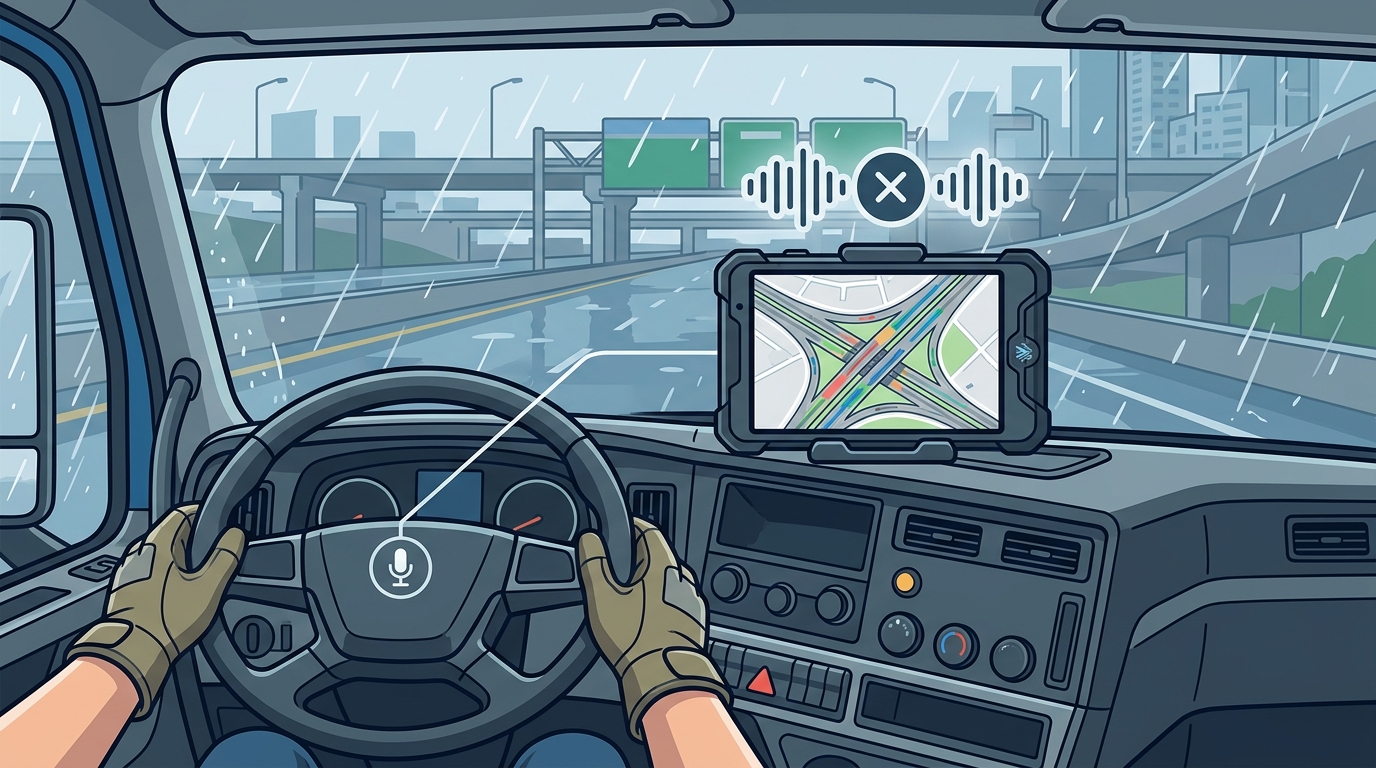
Voice Command Operation Mechanics
The operational quality of a hands-free navigation layer depends on its voice command architecture. This section details how the system processes input and executes actions. It focuses on the specific capabilities required for urban driving in Seattle. For additional details, review the About.
Speech Recognition and Intent Parsing
Voice command operation is the process of converting spoken language into executable navigation actions. High-quality systems use natural language processing to understand intent. For example, a driver can say, "Take me to the nearest gas station," and the system parses the request. It identifies the destination type and calculates the optimal route. In Seattle, where street names can be confusing, this parsing accuracy is a key quality metric. The system must distinguish between similar-sounding addresses and business names. WhereY'at Inc. utilizes a dedicated voice layer to handle these interactions. It is designed to minimize the need for driver correction.
Multi-Modal Interaction
Modern hands-free systems often integrate multiple functions beyond just routing. This includes music selection and trip assistance. The quality of the layer is determined by how seamlessly these functions coexist. A driver should be able to switch from navigation to music without losing their place in the route. This multi-modal capability is essential for long-haul truckers and daily commuters. It reduces the cognitive switching cost. The system must maintain context across different command types. This ensures that a request for a new address does not interrupt an ongoing music session unless explicitly requested.
Reliability in Adverse Conditions
Seattle's climate and urban noise levels test the reliability of voice recognition. Rain on the windshield and traffic noise can degrade microphone input. A high-quality hands-free layer must filter out ambient noise to isolate the driver's voice. This technical capability is a specific quality that differentiates robust systems from basic ones. It ensures that commands are recognized accurately even in challenging environments. WhereY'at Inc. focuses on this reliability to ensure that drivers can maintain focus on the road. The system is built to handle the specific acoustic challenges of the Pacific Northwest.
Comparison of Navigation Interaction Modes
The following table compares the quality attributes of different navigation interaction modes in the context of Seattle driving.
| Interaction Mode | Visual Attention Required | Manual Input Required | Compliance with WA Law | Urban Reliability |
|---|---|---|---|---|
| Manual Touchscreen | High | High | Non-Compliant | Low (Rain/Glare) |
| Basic Voice (Push-to-Talk) | Low | Low | Compliant | Medium |
| Advanced Hands-Free Layer | None | None | Compliant | High |
Key Takeaways
- Hands-free navigation quality is defined by the elimination of visual and manual interaction.
- Washington State law prohibits manual phone use while driving, making voice-only systems essential.
- Seattle's dense urban environment increases the cognitive load on drivers, requiring robust voice parsing.
- High-quality voice layers must filter ambient noise to maintain accuracy in rain and traffic.
- Multi-modal interaction allows drivers to manage music and navigation without losing context.
- Commercial fleets benefit from compliant systems that reduce legal and insurance risks.
Frequently Asked Questions
Is hands-free navigation legal in Washington State?
Yes, hands-free navigation is legal in Washington State. The law prohibits manual operation of wireless devices while driving. Voice-activated systems that do not require holding the device or looking at a screen are generally compliant. Drivers must ensure the system does not require visual confirmation for critical actions.
How does voice command operation work in a hands-free layer?
What specific quality does a hands-free layer offer in Seattle?
The specific quality is the ability to maintain driver attention on the road in a complex urban environment. Seattle's traffic and weather conditions make visual navigation risky. A high-quality hands-free layer ensures that all interactions are auditory, reducing cognitive load and improving safety.
Can I change my destination while driving using voice commands?
Yes, you can change your destination using voice commands. You can speak a new address or request a different route. The system will calculate the new path and provide auditory updates. This allows you to keep your hands on the wheel and eyes on the road.
Does the system work in rainy conditions?
Yes, the system is designed to work in rainy conditions. It uses noise filtering to isolate the driver's voice from ambient sounds like rain and traffic. This ensures that voice commands are recognized accurately even in adverse weather. This is a critical quality for drivers in the Pacific Northwest.
Is this technology suitable for commercial truck drivers?
Yes, this technology is suitable for commercial truck drivers. It helps keep hands on the wheel and attention on the road. For fleets, it provides a compliant way to manage navigation and trip assistance. It reduces the risk of distracted driving violations and improves overall safety. Learn more: WhereY Inc Hands free.